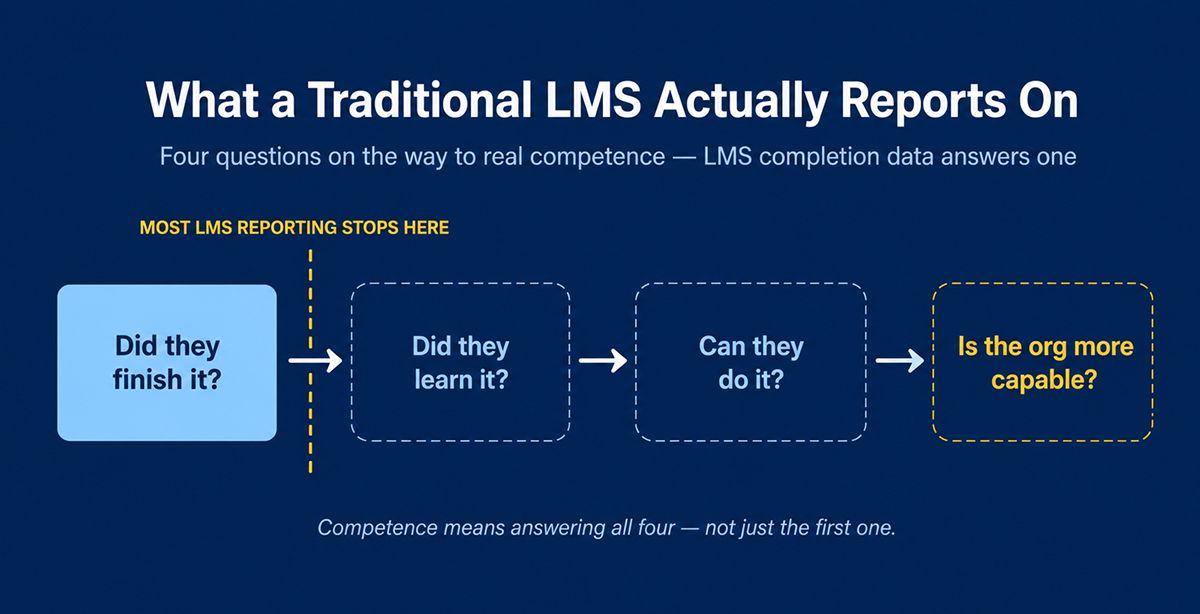
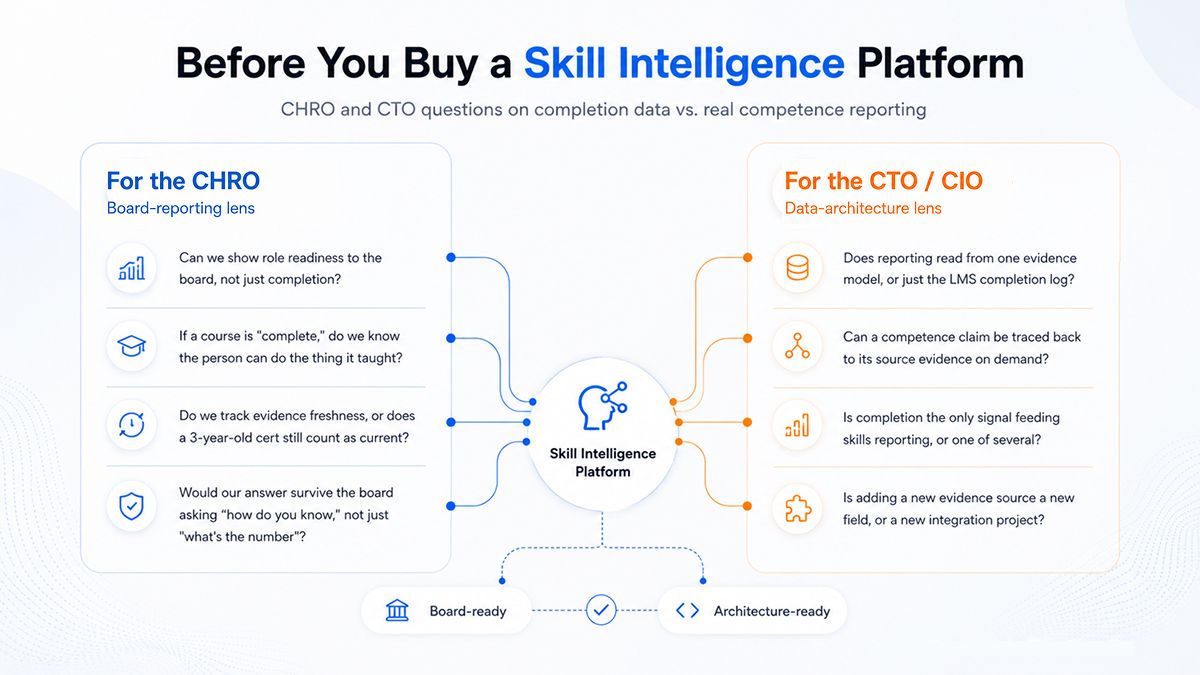
There's a familiar moment in board meetings: the CHRO presents an L&D update, and the headline number is a completion rate. 87% completion this quarter. The board nods. Someone asks what it means for the business, and the honest answer is often thinner than the slide suggests; completion tells you people sat through content. It doesn't tell you whether the organization is any more capable of doing the work in front of it.
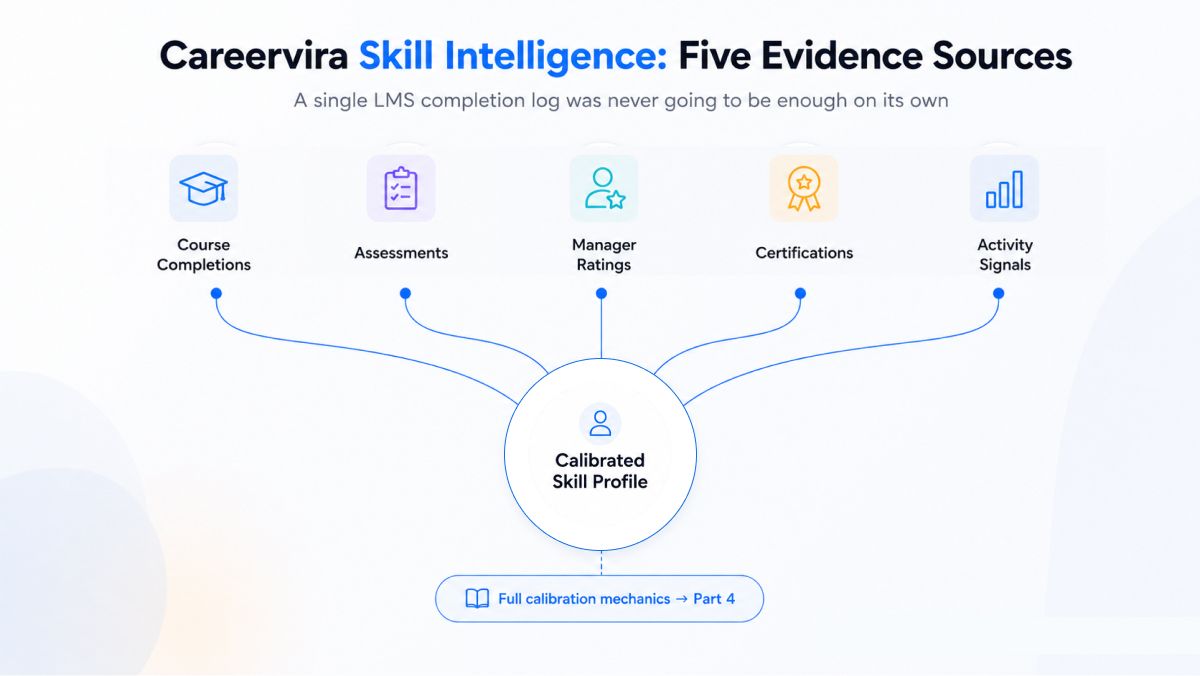
This isn't a failure of the CHRO presenting it. It's a failure of the system underneath the slide. Completion rate is what a traditional LMS is built to produce, so it's what gets reported; not because it's the most useful number, but because it's the only one readily available. Most L&D leaders would happily present role-readiness or capability data instead, if their platform could actually produce it with the same confidence.
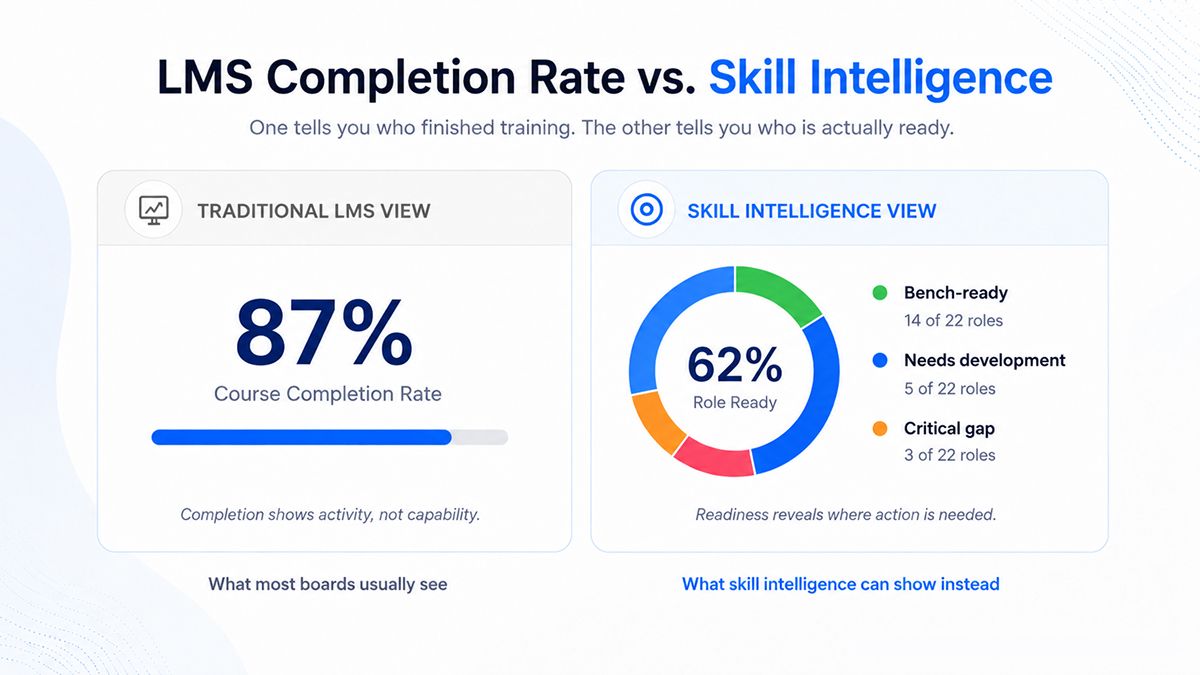
There's a familiar moment in board meetings: the CHRO presents an L&D update, and the headline number is a completion rate. 87% completion this quarter. The board nods. Someone asks what it means for the business, and the honest answer is often thinner than the slide suggests; completion tells you people sat through content. It doesn't tell you whether the organization is any more capable of doing the work in front of it.
This isn't a failure of the CHRO presenting it. It's a failure of the system underneath the slide. Completion rate is what a traditional LMS is built to produce, so it's what gets reported; not because it's the most useful number, but because it's the only one readily available. Most L&D leaders would happily present role-readiness or capability data instead, if their platform could actually produce it with the same confidence.