It's worth naming the stakes plainly before getting into mechanics: skill scores are increasingly the input to real decisions about real people's careers. A calibrated score feeds a promotion shortlist. The shortlist feeds a succession plan. The succession plan feeds a compensation conversation. By the time a number reaches that chain, nobody's asking where it came from; they're treating it as fact.
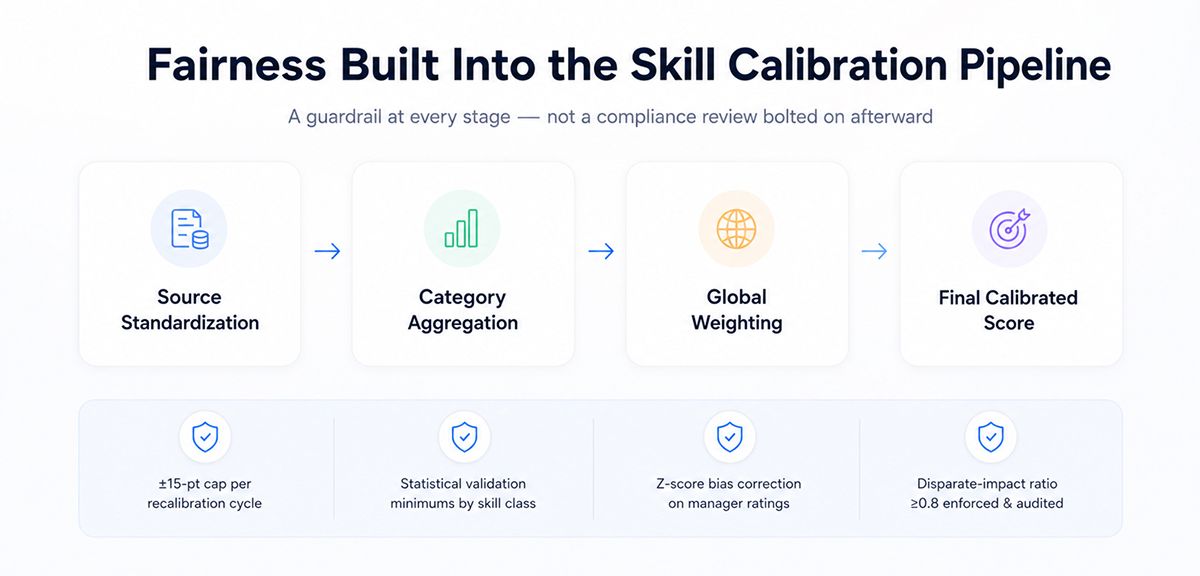
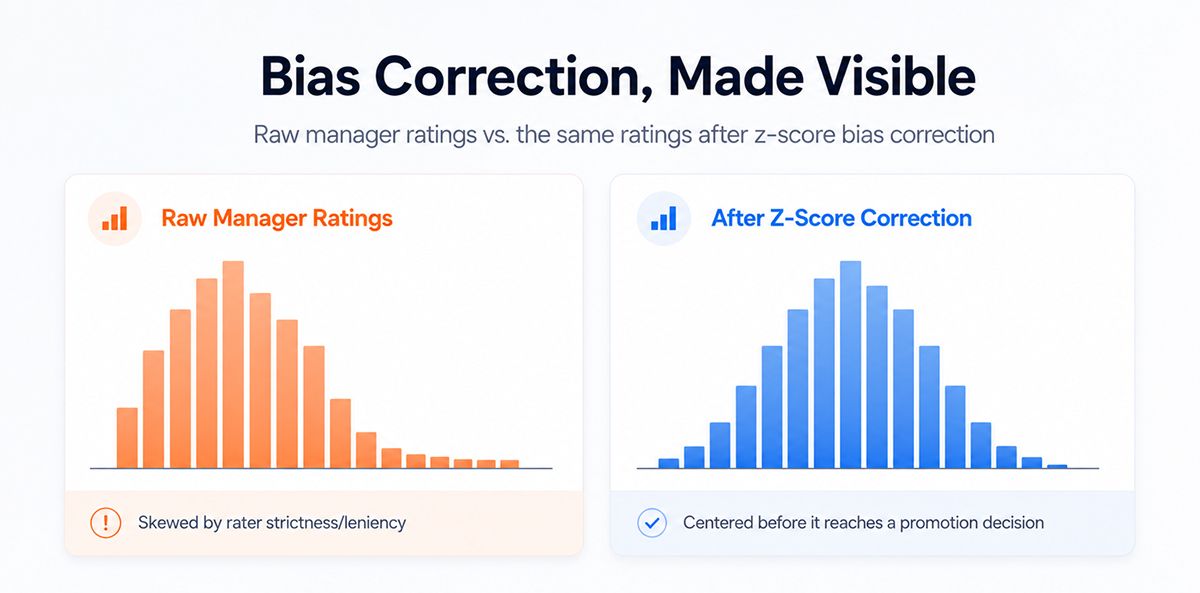
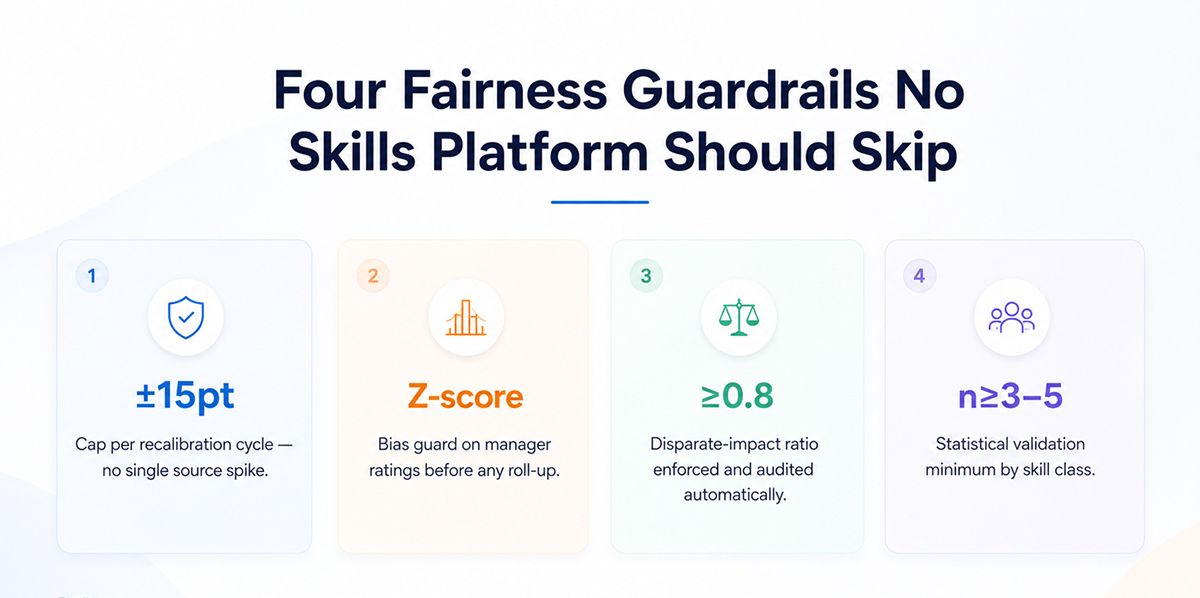
That chain is exactly why a skills platform's fairness architecture deserves the same scrutiny an organization would apply to any other system that influences pay and promotion. A dashboard glitch is a UX problem. A biased scoring pipeline that quietly favors employees with lenient managers is a fairness problem with a paper trail, or the lack of one.
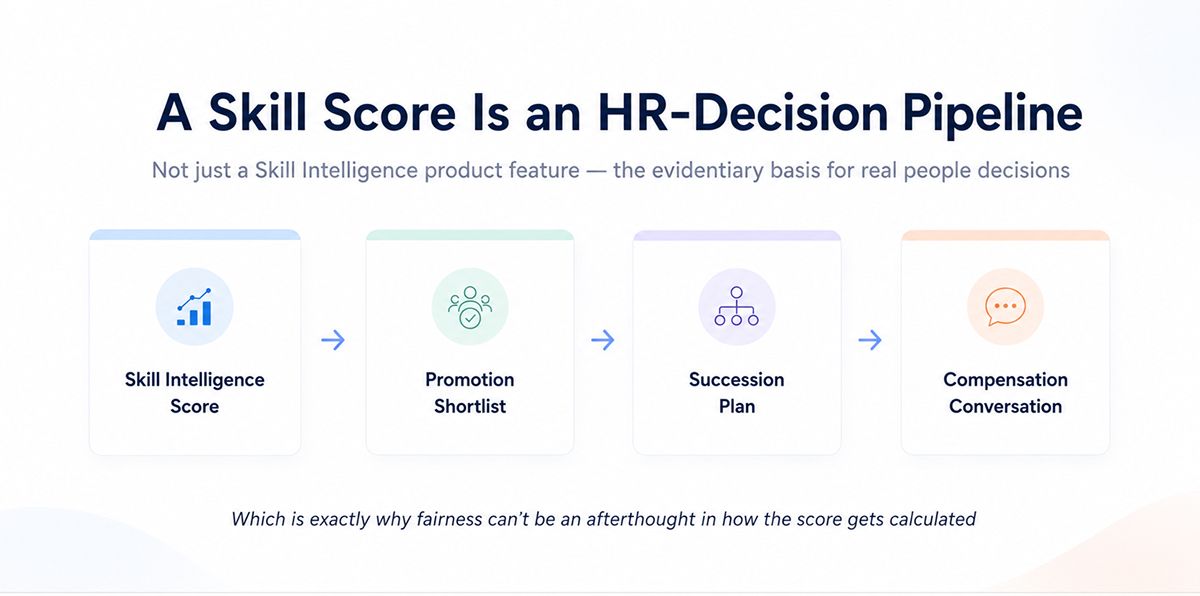
It's worth naming the stakes plainly before getting into mechanics: skill scores are increasingly the input to real decisions about real people's careers. A calibrated score feeds a promotion shortlist. The shortlist feeds a succession plan. The succession plan feeds a compensation conversation. By the time a number reaches that chain, nobody's asking where it came from; they're treating it as fact.
That chain is exactly why a skills platform's fairness architecture deserves the same scrutiny an organization would apply to any other system that influences pay and promotion. A dashboard glitch is a UX problem. A biased scoring pipeline that quietly favors employees with lenient managers is a fairness problem with a paper trail, or the lack of one.