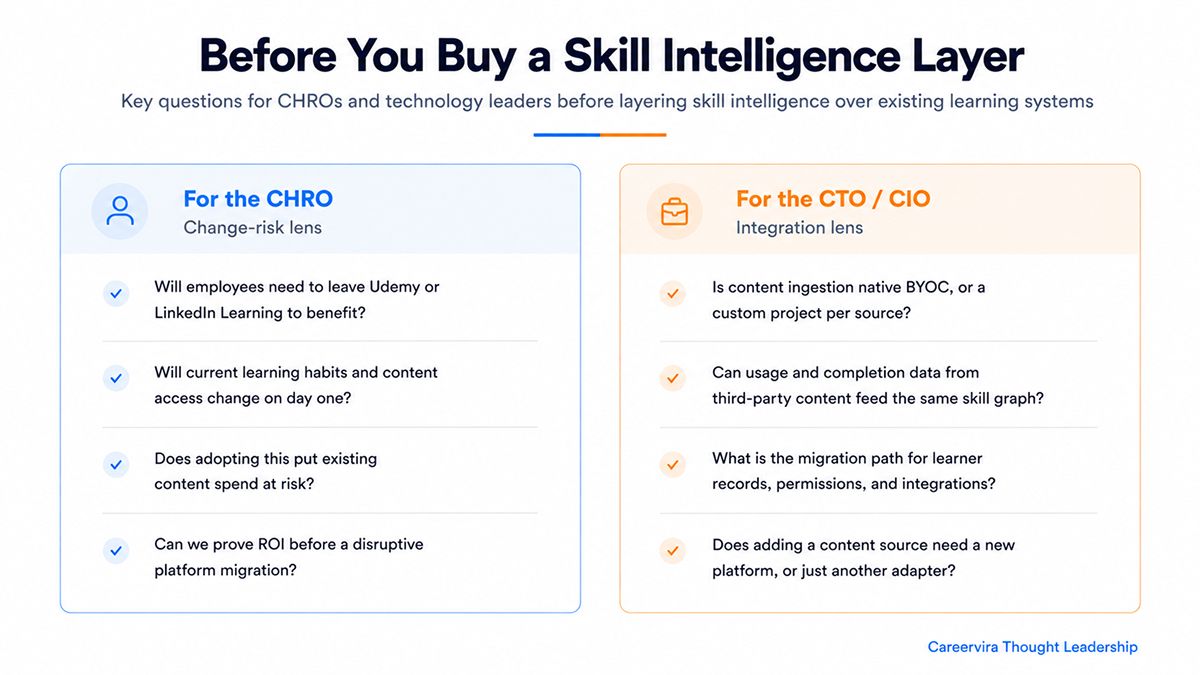
A predictable moment shows up in almost every skills-intelligence evaluation: someone on the buying committee says some version of “we just renewed our Udemy contract” or “our people actually like LinkedIn Learning.” That single sentence has quietly killed more good skills-intelligence initiatives than any competitor ever has; not because the objection is wrong, but because it's usually answered with the wrong response: a pitch for why the buyer should switch content providers.
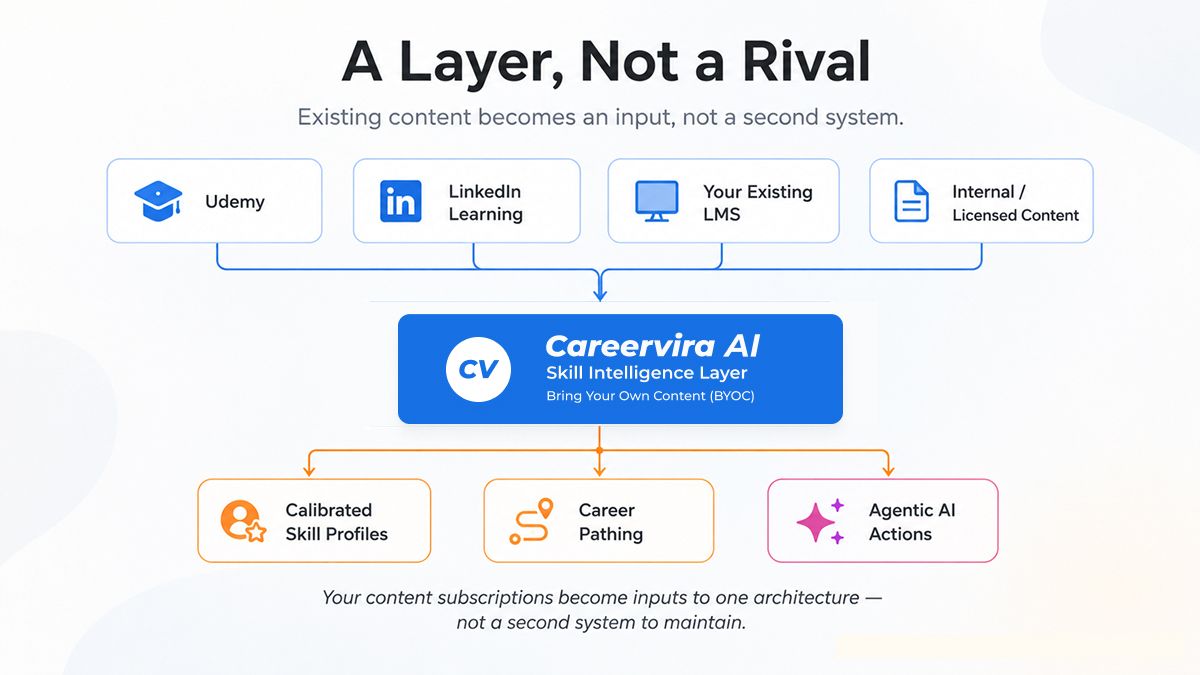
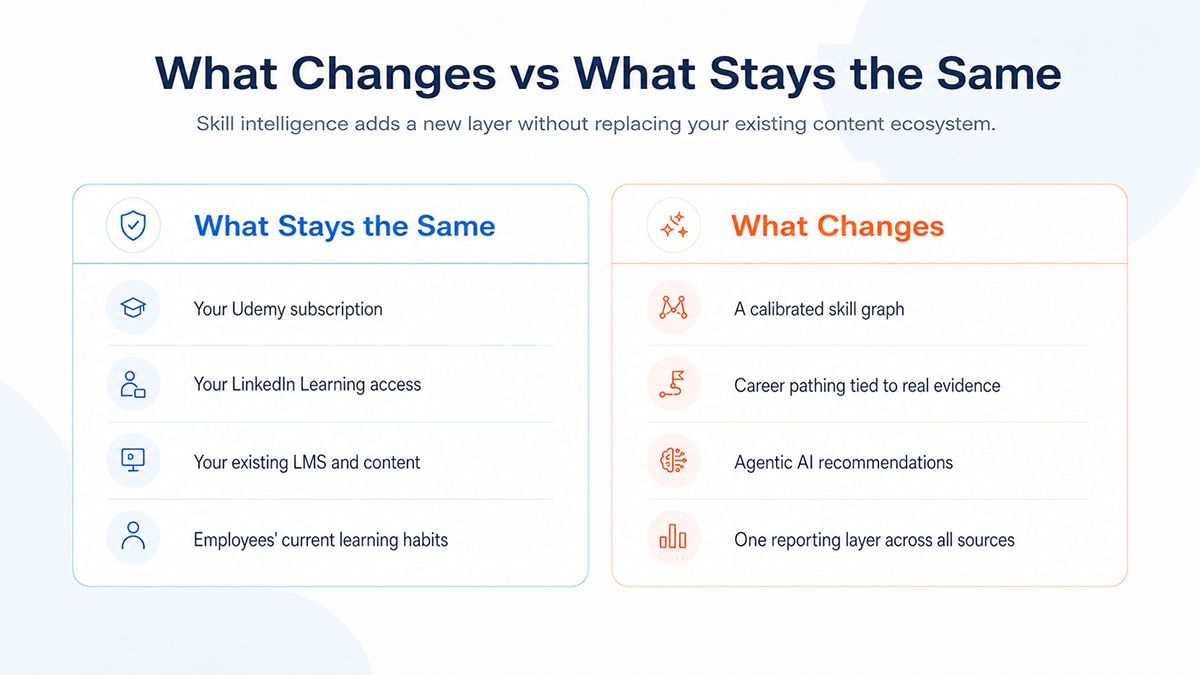
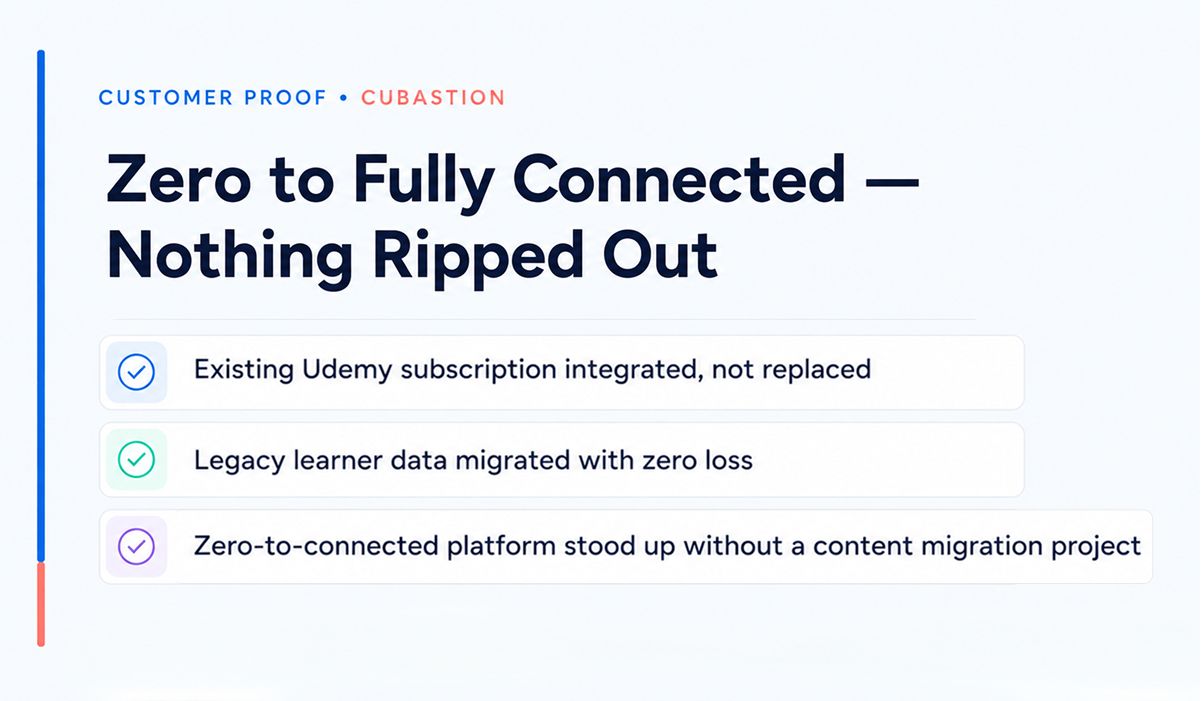
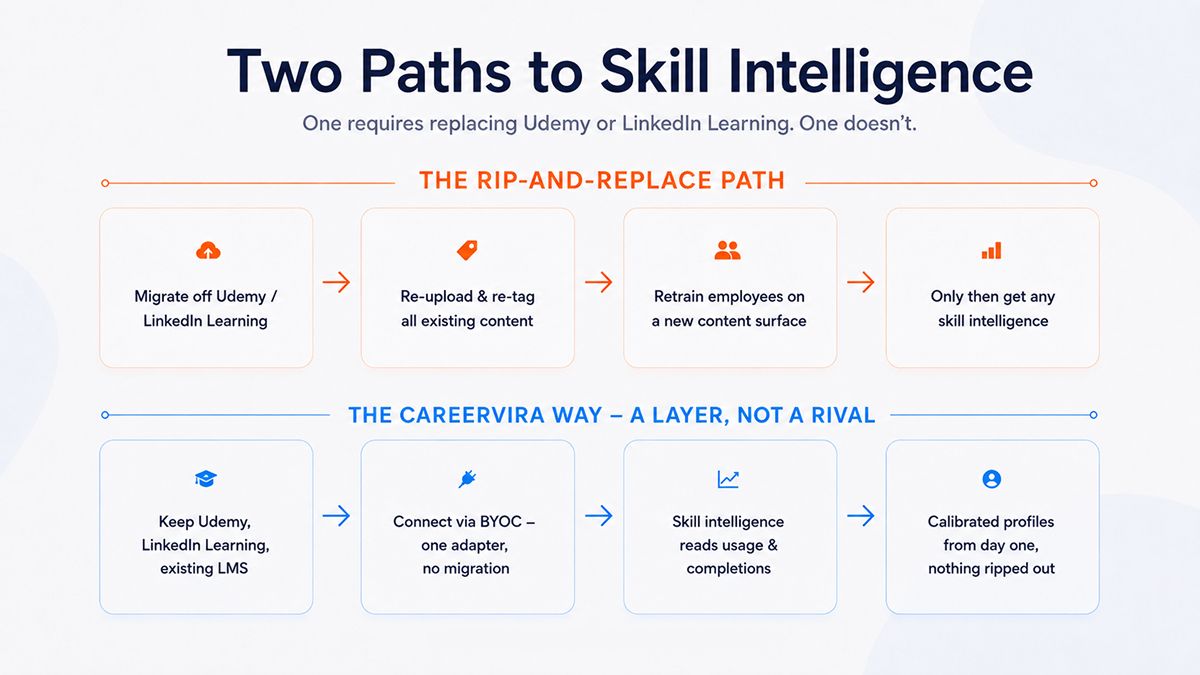
That response frames the decision as a content war, which is a war a skills-intelligence vendor doesn't need to fight and shouldn't try to. The real question was never which content library is better. It's whether an organization can get calibrated skill data out of the content it already has, without a migration project, a re-training effort, or a second content bill.
A predictable moment shows up in almost every skills-intelligence evaluation: someone on the buying committee says some version of “we just renewed our Udemy contract” or “our people actually like LinkedIn Learning.” That single sentence has quietly killed more good skills-intelligence initiatives than any competitor ever has; not because the objection is wrong, but because it's usually answered with the wrong response: a pitch for why the buyer should switch content providers.
That response frames the decision as a content war, which is a war a skills-intelligence vendor doesn't need to fight and shouldn't try to. The real question was never which content library is better. It's whether an organization can get calibrated skill data out of the content it already has, without a migration project, a re-training effort, or a second content bill.