The AI Ladder vs. The AI Add-On: Why Every Vendor Says “AI” but Only Some Mean It as Architecture

Author Image

Vijay Singh

11 August 2026

Add To Wishlist

The AI Ladder vs. The AI Add-On: Why Every Vendor Says “AI” but Only Some Mean It as Architecture

Discover why most vendors slap “AI” on legacy tools as an add-on, while true AI-native platforms embed intelligence into their architecture, and how to spot the difference before you buy.

Features

Table of Contents

  • Description

  • Every Vendor Says “AI” Now

  • The One Test That Actually Separates Them

  • The Question to Ask Before You Sign

  • Before You Buy

Discover why most vendors slap “AI” on legacy tools as an add-on, while true AI-native platforms embed intelligence into their architecture, and how to spot the difference before you buy.

Description

Every vendor in this category now says “AI” on their homepage, which makes the term nearly meaningless as a differentiator. The real question is architectural: does more AI capability mean flipping a switch inside the platform you already run, or does it mean a new module, a new add-on tier, or a new vendor relationship? That single test: “if I want more AI next year, do I sign a new contract or increase a number?”, separates structural AI from AI bolted onto a delivery platform, and it's a question most RFPs never ask directly.

Every Vendor Says “AI” Now

Open any homepage in this category and the word “AI” appears somewhere above the fold, usually more than once. That's not a criticism of any single vendor; it's just where the market is. AI has become table stakes as a claim, meaning it is no longer useful as a differentiator on its own. Two platforms can both honestly say “AI-powered” and mean structurally different things by it.

That creates a real problem for a buyer trying to evaluate the category: if everyone says the same word, the word stops doing any evaluative work. What's needed instead is a way to test what's actually underneath the claim; not whether AI exists, but how it's built, and what happens when you want more of it.
Open any homepage in this category and the word “AI” appears somewhere above the fold, usually more than once. That's not a criticism of any single vendor; it's just where the market is. AI has become table stakes as a claim, meaning it is no longer useful as a differentiator on its own. Two platforms can both honestly say “AI-powered” and mean structurally different things by it.

That creates a real problem for a buyer trying to evaluate the category: if everyone says the same word, the word stops doing any evaluative work. What's needed instead is a way to test what's actually underneath the claim; not whether AI exists, but how it's built, and what happens when you want more of it.
The One Test That Actually Separates Them

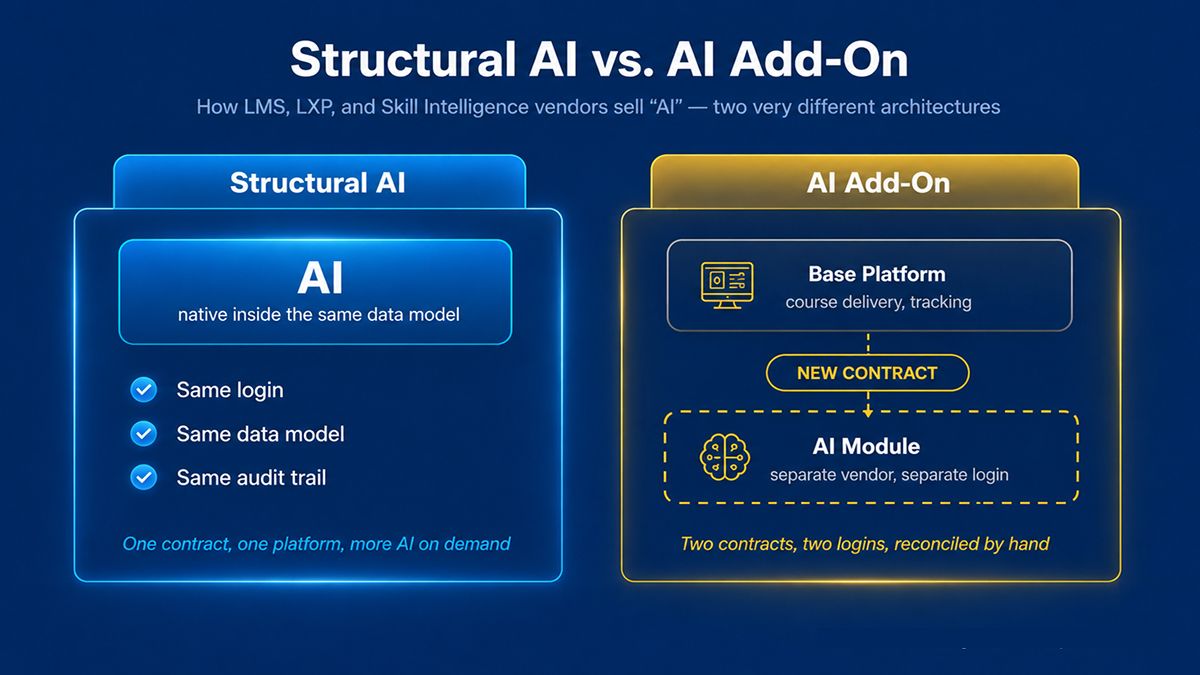
There's a simple diagnostic that cuts through most of the marketing language: when you want more AI capability next year, does that mean flipping a switch inside the platform you already run: same login, same data, same contract, or does it mean a new module, a new tier upgrade with its own procurement cycle, or a second vendor relationship layered on top of the first?

The first pattern is what “structural” AI actually means: it's built into the same data foundation from day one, and getting more of it is a configuration change, not a re-platforming decision. The second pattern is what “bolted-on” AI means in practice: AI that exists, sometimes genuinely well-built, but that lives outside the core architecture and has to be separately integrated, licensed, and reconciled.


Two platforms can both say “AI-powered.” Only one means it as architecture.

There's a simple diagnostic that cuts through most of the marketing language: when you want more AI capability next year, does that mean flipping a switch inside the platform you already run: same login, same data, same contract, or does it mean a new module, a new tier upgrade with its own procurement cycle, or a second vendor relationship layered on top of the first?

The first pattern is what “structural” AI actually means: it's built into the same data foundation from day one, and getting more of it is a configuration change, not a re-platforming decision. The second pattern is what “bolted-on” AI means in practice: AI that exists, sometimes genuinely well-built, but that lives outside the core architecture and has to be separately integrated, licensed, and reconciled.


Two platforms can both say “AI-powered.” Only one means it as architecture.

What a Structural AI Ladder Looks Like

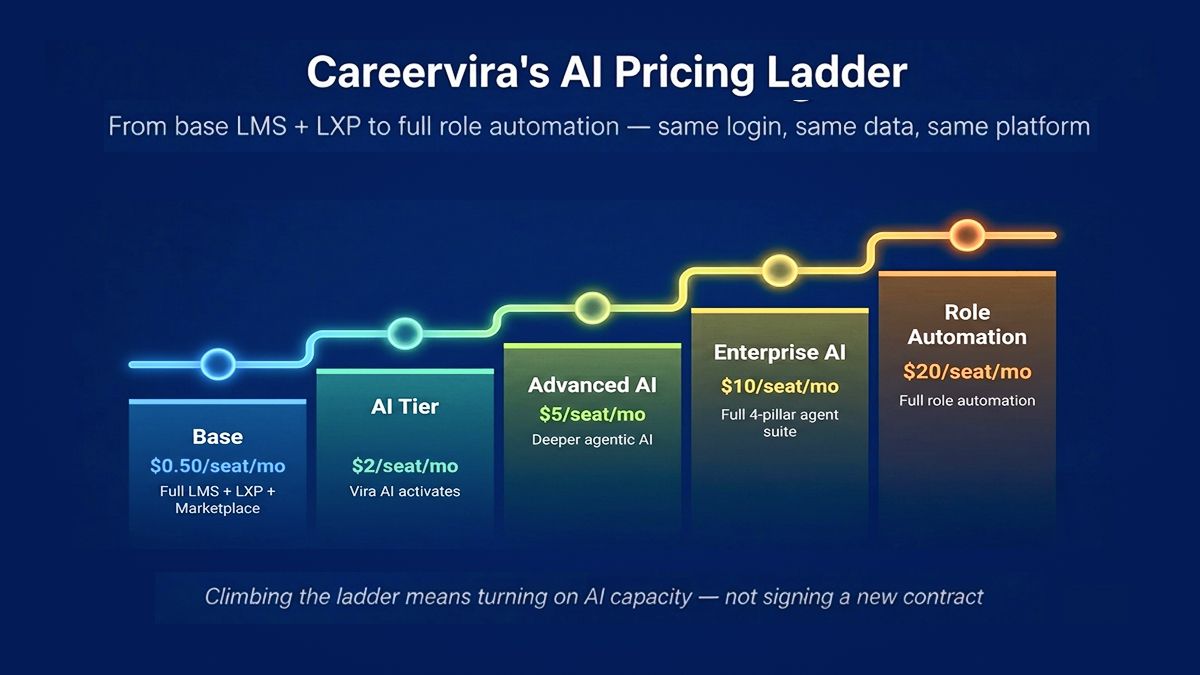
The clearest evidence that AI is structural rather than bolted-on is a pricing and packaging model that lets a buyer add AI capacity without leaving the platform. CareerVira's own tiering is a useful concrete example of what that looks like in practice: the base tier already includes the full LMS, LXP, and content marketplace, and every tier above it- AI Tier, Advanced AI, Enterprise AI, Role Automation is the same login, the same data model, and the same contract, just with more AI capacity turned on.

The distinction that matters for a buyer isn't the specific price points; it's the shape of the ladder. Climbing it should never require a new procurement cycle, a new integration project, or a new vendor relationship. If it does, that's a bolted-on model wearing a ladder's clothing.


A structural AI ladder: every rung is the same platform, just more capacity.

The clearest evidence that AI is structural rather than bolted-on is a pricing and packaging model that lets a buyer add AI capacity without leaving the platform. CareerVira's own tiering is a useful concrete example of what that looks like in practice: the base tier already includes the full LMS, LXP, and content marketplace, and every tier above it- AI Tier, Advanced AI, Enterprise AI, Role Automation is the same login, the same data model, and the same contract, just with more AI capacity turned on.

The distinction that matters for a buyer isn't the specific price points; it's the shape of the ladder. Climbing it should never require a new procurement cycle, a new integration project, or a new vendor relationship. If it does, that's a bolted-on model wearing a ladder's clothing.


A structural AI ladder: every rung is the same platform, just more capacity.

The Question to Ask Before You Sign

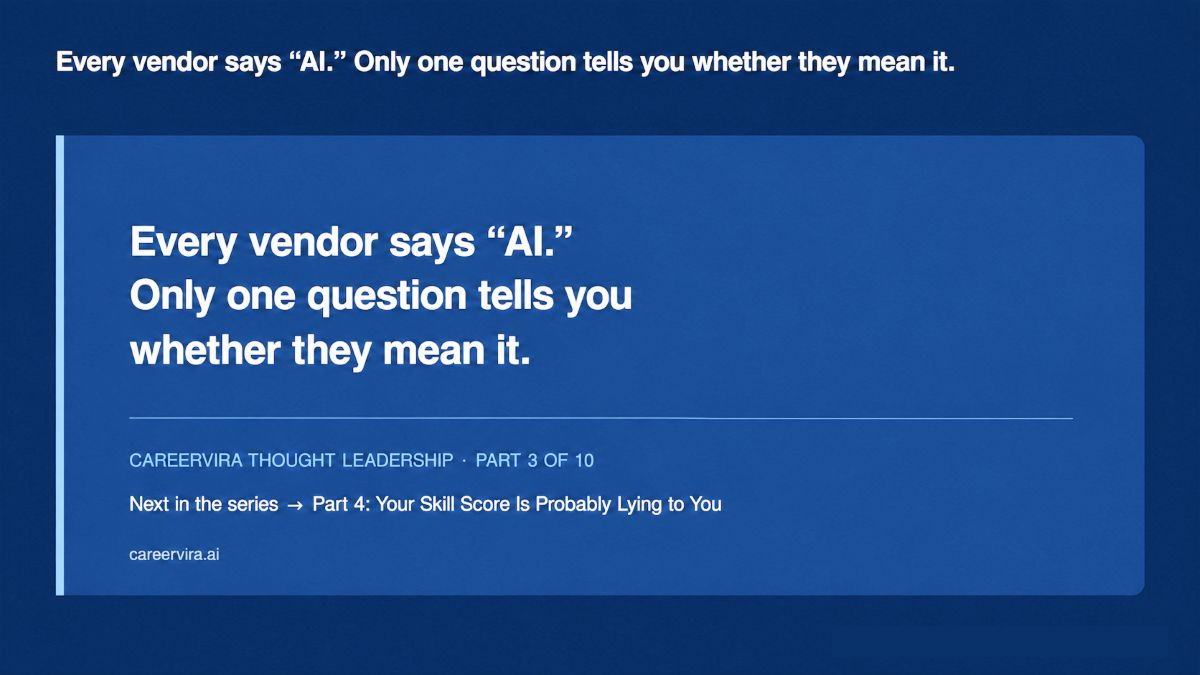
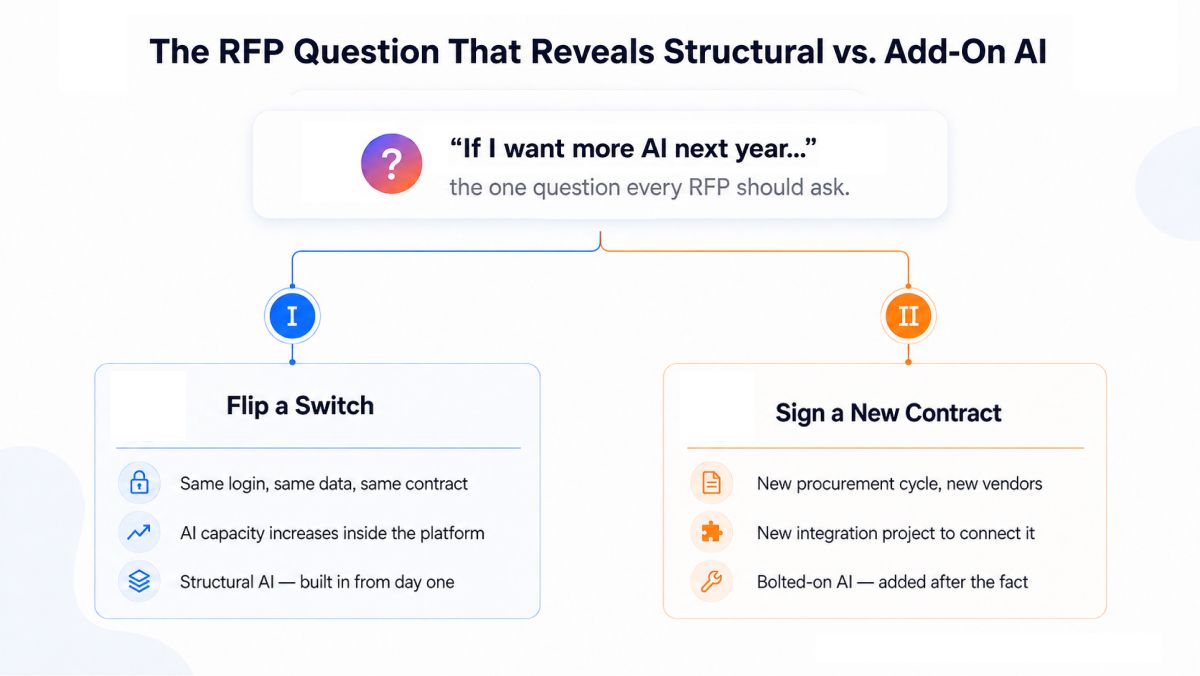
This is worth turning into a literal question in any vendor conversation, asked plainly rather than inferred from a pricing page: “If we want more AI capability a year from now, do we sign a new contract, or do we increase a number inside the one we already have?” The answer tends to reveal the architecture faster than any technical demo.


 The one question that reveals whether AI is structural or bolted-on.


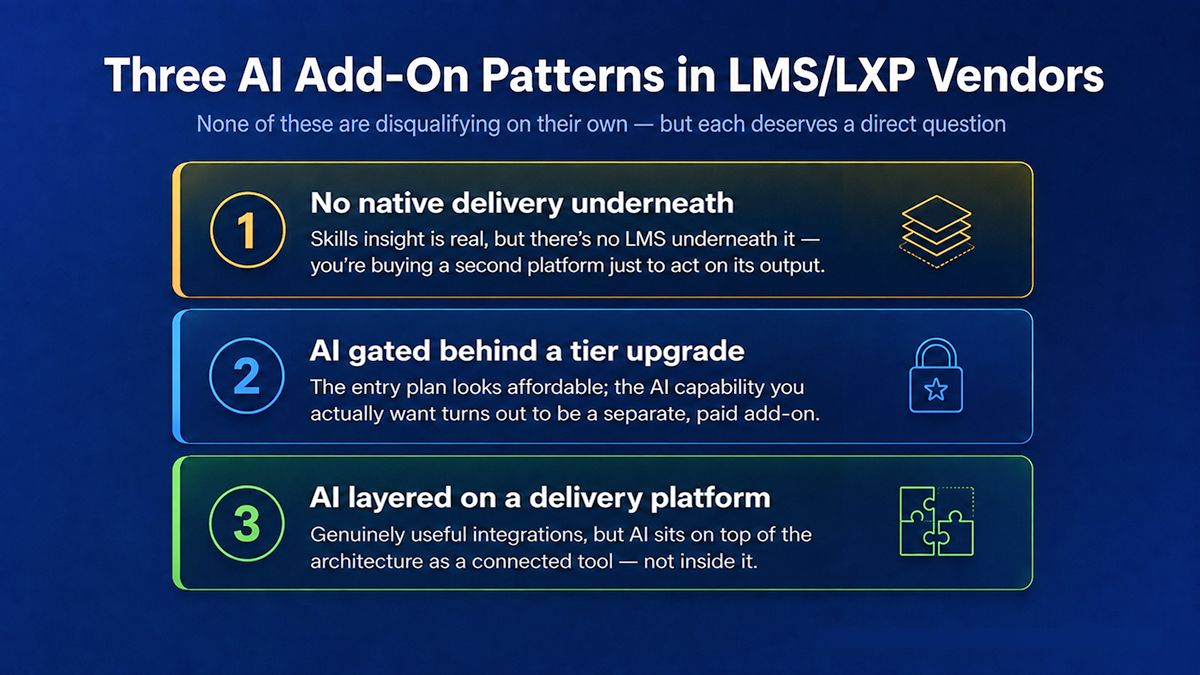
None of the three patterns below are automatically disqualifying; there are legitimate reasons a vendor's roadmap might look like any of them. But each is worth a direct question rather than an assumption, because each one quietly changes the total cost and complexity of getting more AI later.


Three patterns worth a direct question, not an assumption.

This is worth turning into a literal question in any vendor conversation, asked plainly rather than inferred from a pricing page: “If we want more AI capability a year from now, do we sign a new contract, or do we increase a number inside the one we already have?” The answer tends to reveal the architecture faster than any technical demo.


 The one question that reveals whether AI is structural or bolted-on.


None of the three patterns below are automatically disqualifying; there are legitimate reasons a vendor's roadmap might look like any of them. But each is worth a direct question rather than an assumption, because each one quietly changes the total cost and complexity of getting more AI later.


Three patterns worth a direct question, not an assumption.

Before You Buy

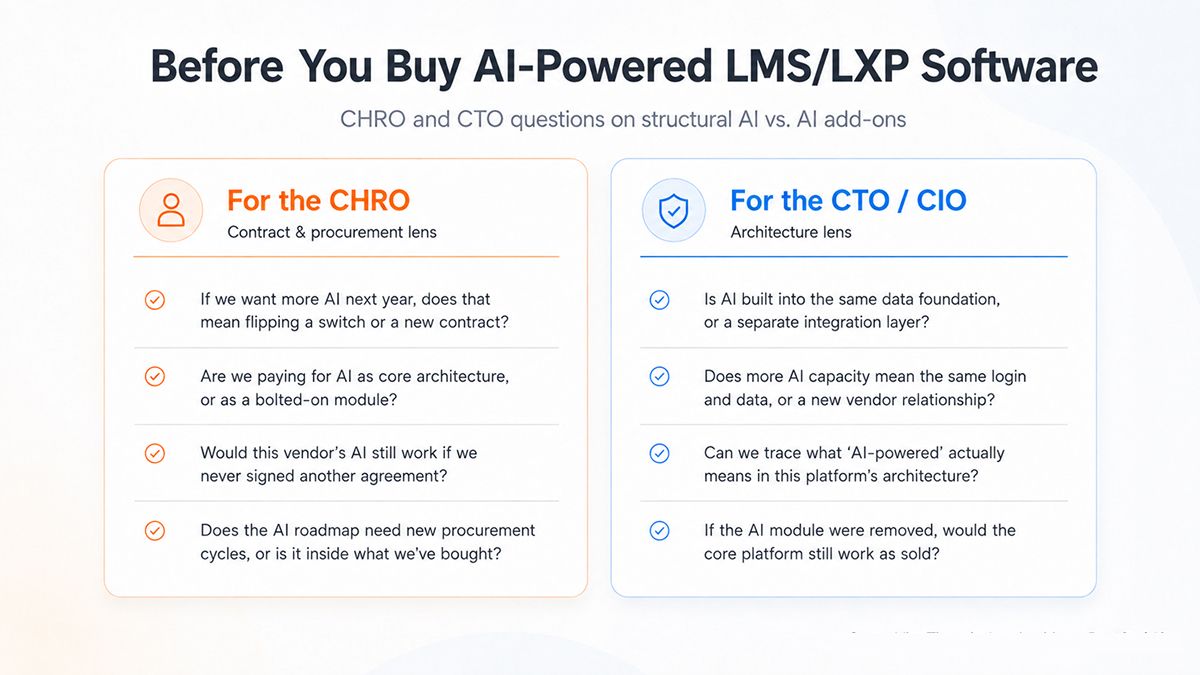
The structural-vs-bolted-on distinction matters differently depending on who's asking. A CHRO experiences it as a budget and procurement question: will we be back at the negotiating table every time we want more capability? A CTO experiences it as an architecture question: is this actually one system, or two systems wearing one brand?


Eight questions, two lenses — what to ask before any vendor conversation ends.


The structural-vs-bolted-on distinction matters differently depending on who's asking. A CHRO experiences it as a budget and procurement question: will we be back at the negotiating table every time we want more capability? A CTO experiences it as an architecture question: is this actually one system, or two systems wearing one brand?


Eight questions, two lenses — what to ask before any vendor conversation ends.


Features

Table of Contents

  • Description

  • Every Vendor Says “AI” Now

  • The One Test That Actually Separates Them

  • The Question to Ask Before You Sign

  • Before You Buy